
I Was The Customer First
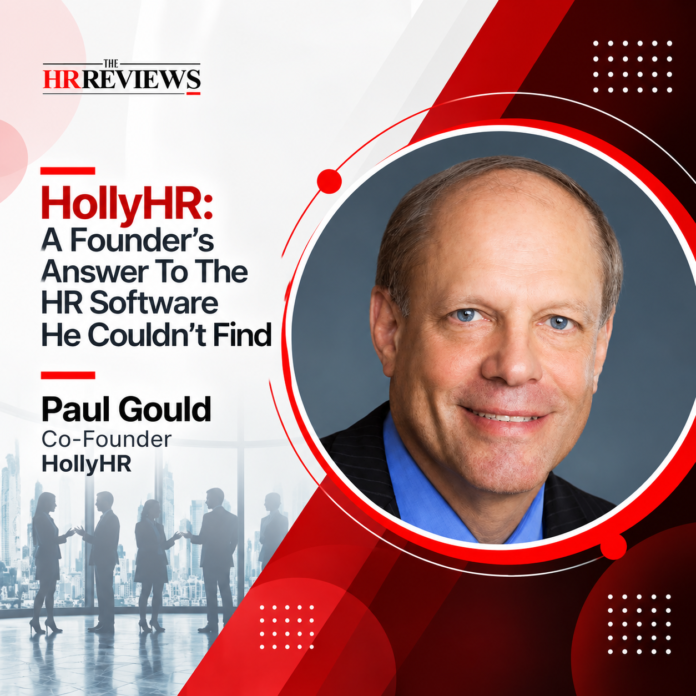
Paul Gould did not start HollyHR because he believed the market needed another HR software company. He started it because, after more than 25 years of running small businesses, he had repeatedly experienced the problem from the customer’s side.
Choosing HR software often meant accepting an uncomfortable compromise. One product could be polished but become increasingly expensive as the workforce grew. Another might be affordable but awkward to use. Gould’s experience led him toward a simpler question: what would HR software look like if it were designed by someone who had actually bought it, implemented it, paid for it, and asked employees to use it?
That question became HollyHR, a founder-led UK HR platform built around small teams. Gould describes the company as the “useful middle” between expensive systems and overly basic tools. The platform brings employee records, leave, sickness, documents, and onboarding together while deliberately keeping the proposition focused.
HollyHR is still young, and that is part of its story rather than something to hide. The company openly acknowledges that it does not yet have the customer history or assurance certifications of an established HR software supplier. Instead, its proposition is based on simplicity, transparent pricing, data portability, and direct access to the person building the product.
The Product Is Built Around Restraint
There is something unusual about HollyHR’s positioning in a market where HR platforms frequently compete by adding more modules, more dashboards, and more functionality. HollyHR takes almost the opposite approach.
Its core product concentrates on the fundamental records and processes that small teams need to manage effectively. Employee information, leave, sickness, documents, and onboarding are kept together rather than spread across separate tools. The result is intentionally narrower than the sprawling HR suites used by larger organizations.
That restraint is closely connected to Gould’s experience as a buyer. He wanted a product that was straightforward to use, clearly priced, and serious about the underlying employee records. The company’s product philosophy therefore focuses less on creating the longest feature list and more on making the everyday experience understandable.
The Thinking Behind HollyHR
Simple By Design: The platform focuses on essential HR processes rather than overwhelming smaller teams with unnecessary functionality.
Transparent Growth: Core pricing is presented publicly on a per-person basis as the organization grows.
Data Portability: Organizations can prepare a structured export of their information before leaving the platform.
Founder Access: Customers can communicate directly with Gould about product, migration, or company questions.
Making The Commercial Model Part Of The Product
For a young software company, pricing is normally treated as a commercial decision. HollyHR makes it part of its product philosophy.
The company offers its core platform free for up to 10 active employees. Beyond that point, customers can move to publicly stated per-person pricing as their team expands. There is no requirement to commit to a traditional sales process before getting started.
The approach is significant because small businesses frequently experience the economics of HR software differently from large enterprises. A platform that appears affordable at ten employees can become considerably more expensive as the organization reaches 30, 50, or 100 people. HollyHR’s model is designed to make that progression easier to understand before a business commits.
The company also treats leaving as part of the customer experience. Its platform provides a structured organization export, allowing customers to prepare their information themselves rather than making data extraction dependent on a complicated exit process. That may seem like a small detail, but it represents a broader philosophy: the customer should remain in control of its own information.
A Different Kind Of Young HR Company
HollyHR is not presenting itself as an established enterprise HR provider. The company describes itself as young, founder-led, and still building its customer history and broader assurance credentials. That transparency gives the business a different kind of credibility: it does not attempt to disguise where it is in its development.
For Gould, the advantage of remaining close to the product is that decisions can stay connected to actual customer problems. His experience as a small-business operator provides the perspective behind the platform, while the company’s deliberately focused product gives that perspective a practical expression.
The broader opportunity for HollyHR is therefore not simply to compete with larger HR platforms feature for feature. It is to make a different argument about what smaller businesses actually need. They may not need hundreds of functions, elaborate implementation programmes, or an HR system that requires its own project team. They may simply need their employee records organized, leave and sickness managed, documents accessible, onboarding structured, and the whole experience easy enough that people actually use it.
That is the space HollyHR is entering. Its story is not about building the biggest HR platform. It is about taking the perspective of the customer, removing what feels unnecessary, and building the kind of HR software a small-business operator might genuinely want to buy.